Languages Spoken in Gilgit-Baltistan
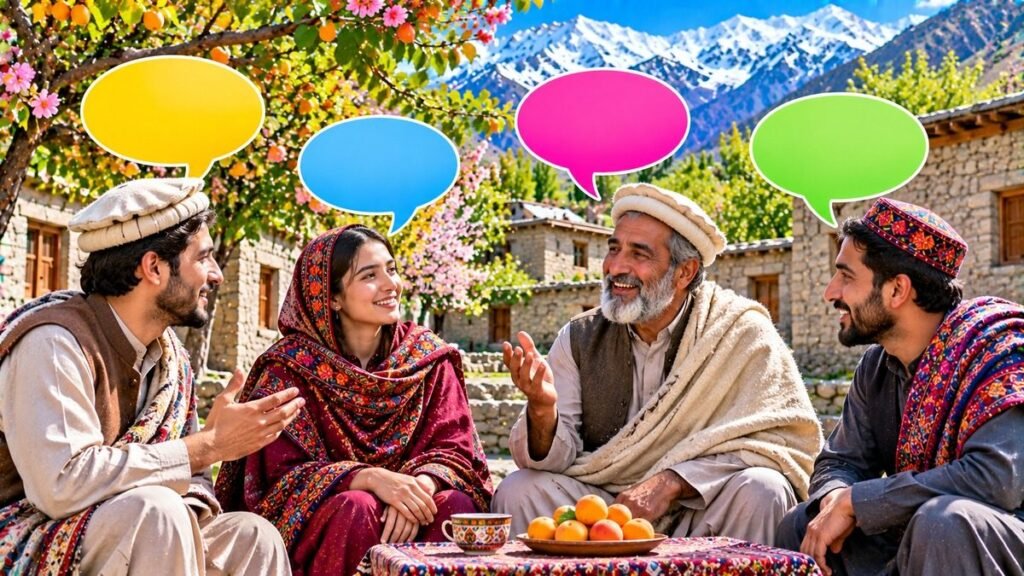
Gilgit-Baltistan is one of the most language rich regions of Pakistan. In a single day’s drive you can hear several languages from completely different families. Urdu is used by almost everyone as a common language, but at home most people speak their own mother tongue.
Main languages of Gilgit-Baltistan
| Language | Where it is spoken |
|---|---|
| Shina | Gilgit, Diamer, Astore, parts of Ghizer and Nagar |
| Balti | Baltistan: Skardu, Shigar, Ghanche, Kharmang |
| Burushaski | Hunza, Nagar and Yasin |
| Wakhi | Upper Hunza (Gojal) and the Ishkoman valley |
| Khowar | Parts of Ghizer, close to Chitral |
| Domaki | A small community in Hunza and Nagar |
| Urdu | Common language across GB |
A closer look
Shina
Shina is the most widely spoken language in GB. It belongs to the Dardic group of languages. If you want to learn Shina words and phrases, try the trilingual dictionary at Learn Shina.
Balti
Balti is a Tibetic language, close to Ladakhi. It is spoken across Baltistan and has old literary traditions.
Burushaski
Burushaski is a language isolate, which means it is not related to any other known language in the world. It is spoken mainly in Hunza, Nagar and Yasin.
Wakhi
Wakhi is an Iranian language spoken in upper Hunza and also in parts of Afghanistan, Tajikistan and China.
Why languages matter in GB
Many of these languages are spoken by small communities and are mostly passed down orally. Local writers, teachers and online projects are working to record and teach them so young people keep their mother tongues alive.
Useful tip for visitors
Urdu and basic English work in most towns, hotels and shops. Learning a simple greeting in the local language, like “salam” with a smile, goes a long way.
More about GB
See GB culture and our complete GB guide.
Frequently asked questions
What is the main language of Gilgit-Baltistan?
Shina is the most widely spoken, followed by Balti and Burushaski. Urdu is the common language.
Which language is spoken in Hunza?
Burushaski in central Hunza and Wakhi in upper Hunza, with Shina and Domaki in some areas.
Sawal poochein